

Why Traditional Steel Rebar Falls Short in Infrastructure
Infrastructure built to last a generation is only as good as the materials holding it together. For decades, steel rebar was the default choice – reliable, well-understood and widely available. But in environments where moisture, chlorides and temperature swings are constant, steel has a known weakness: it corrodes. And when rebar corrodes inside a bridge deck or highway barrier, the repair costs and safety implications are severe.
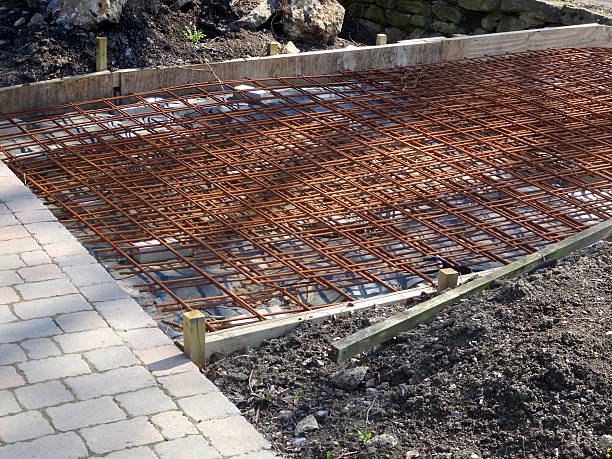
Chloride-induced corrosion is especially damaging. As steel rusts and expands within concrete, it exerts pressure on the surrounding concrete, causing the concrete to break away in a process called concrete spalling. Take the case of India’s highway construction in coastal areas; such highway projects are subject to constant barrage from salty sea spray and excessive moisture levels. Under such extreme conditions, traditional concrete structures with steel reinforcement often need major repairs within 15-20 years.
Such structures have a huge maintenance bill and the total cost of repairs during a structure’s life cycle sometimes becomes higher than the construction cost. It includes bridges over industrial areas, river crossings in chemically affected regions and flyovers in the hot and humid climatic conditions. Glass fiber reinforced polymer bars are used to overcome this deficiency.
What Are Glass Fiber Reinforced Polymer Bars?
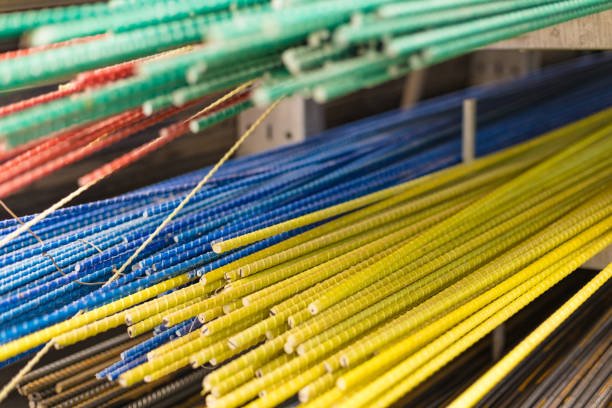
Glass fiber reinforced polymer bars are composite reinforcement elements made by embedding high-strength glass fibers in a polymer resin matrix – typically vinyl ester or epoxy. The result is a rebar that is non-corrosive, non-magnetic, lightweight and carries a tensile strength that often exceeds conventional steel.
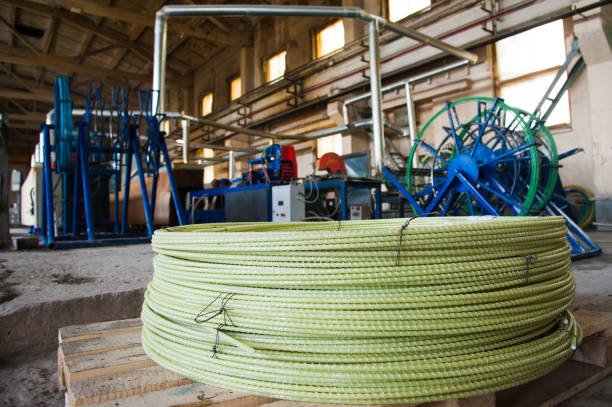
The bars are manufactured through a pultrusion process, which pulls fiber bundles through a resin bath and a heated die, creating a continuous, dense composite profile. Surface deformations – similar to those on steel rebar are added to ensure proper mechanical bond with concrete.
Compared to steel, glass fiber reinforced polymer bars weigh roughly 75% less per unit length. They do not conduct electricity or interfere with electromagnetic signals. And unlike steel, they will not corrode in the presence of moisture, chlorides or most industrial chemicals even after decades of service.
Key Applications in Bridge and Highway Construction
Bridge Decks and Deck Slabs
Bridge decks are arguably the most demanding application for any reinforcement material. They endure direct traffic loads, thermal cycling, water infiltration from rainfall and runoff and in certain geographies – de-icing chemicals. Glass fiber reinforced polymer bars have been successfully used in bridge deck slabs across North America, Europe and increasingly across South and Southeast Asia because they eliminate the corrosion mechanism entirely.
In practical terms, a deck reinforced with gfrp rebar can deliver a service life of 75 to 100 years with significantly reduced maintenance. For project consultants calculating lifecycle costs, that difference is material especially on long-span structures where deck replacement is both expensive and disruptive.
Coastal and Marine Bridge Structures
Few environments are harder on reinforced concrete than the marine zone. Tidal splash, salt-laden air and constant moisture create near-ideal conditions for chloride-induced corrosion. India has over 7,500 km of coastline and several infrastructure development programs including coastal road and port connectivity projects are pushing construction into exactly these environments.
For bridges in these zones, specifying glass fiber reinforced polymer bars is no longer just an engineering preference – it is increasingly a sound financial decision. Projects in Gujarat, Goa, Kerala and Tamil Nadu have begun evaluating GFRP for abutments, pier caps and deck slabs where chloride exposure is highest.
Highway Pavements and Median Barriers
Concrete pavements and highway barriers face chronic exposure to surface water, embedded contaminants and in some regions, chemical spillage from freight transport. GFRP reinforcement offers a path to significantly longer service intervals without the cracking and spalling that follows steel corrosion.
Median crash barriers and jersey barriers along national highways are also a growing application. Being lightweight, glass fiber reinforced polymer bars make precast barrier units easier to transport and install, which matters in highway construction where logistics and program timelines are tight.
Retaining Walls and Slope Stabilization
Highway construction through hilly terrain – the Western Ghats, Himachal Pradesh, Uttarakhand often requires extensive retaining wall systems and slope stabilization structures. These elements sit in direct contact with soil and groundwater for their entire service life.
GFRP soil nails and glass fiber reinforced polymer bars used in shortcrete-faced retaining walls resist the chemical attack of acidic soils, sulphates and varying groundwater chemistry. In sections of hill highways where maintenance access is difficult or costly, the extended durability of GFRP makes a compelling engineering case.
Electromagnetically Sensitive Zones
Modern infrastructure increasingly shares space with sensitive equipment – traffic management systems, communication arrays, railway signalling zones and in some cases, medical or research facilities near highway corridors. Steel rebar creates magnetic interference that can disrupt these systems.
Because glass fiber reinforced polymer bars are electromagnetically neutral, they are the preferred reinforcement wherever magnetic transparency is required. Airport access roads, railway overpasses and toll plazas with electronic monitoring infrastructure are all strong candidates for GFRP-reinforced concrete.
GFRP vs Steel Rebar: A Practical Comparison for Infrastructure Projects
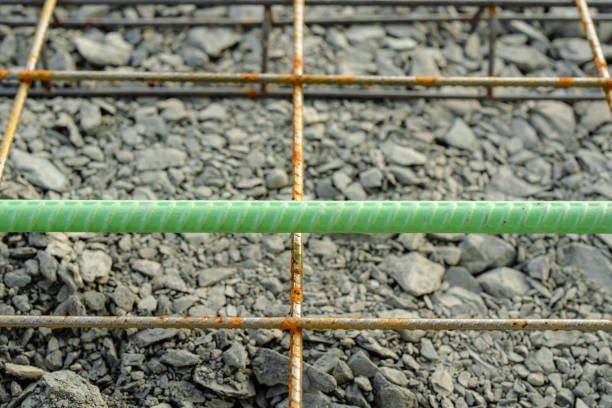
Understanding where gfrp rebar offers a genuine advantage and where steel still makes sense is important for engineers and procurement teams making material decisions.
| Property | GFRP Bars | Steel Rebar |
| Corrosion Resistance | Excellent | Poor |
| Tensile Strength | High (700–1000 MPa) | Moderate (400–500 MPa) |
| Weight | ~75% lighter | Baseline |
| Electromagnetic Neutrality | Yes | No |
| Cost (India) | Moderate (competitive) | Lower upfront |
| Lifespan in Harsh Environments | 50+ years | 20–30 years |
It is worth noting that gfrp rebar have a lower modulus of elasticity than steel, which means designs must account for greater deflection under load. Structural engineers specify additional section depth or modified reinforcement ratios to compensate for a well-understood design adjustment covered by international codes such as ACI 440.1R.
GFRP Price in India and Total Cost Considerations
One of the most common questions from procurement teams and project consultants concerns gfrp price in india. On a per-kilogram basis, glass fiber reinforced polymer bars cost more than conventional steel rebar upfront. This is a straightforward material cost fact and should not be ignored.
However, just considering unit material cost would not represent the whole economic picture. As soon as the economics is shifted to ‘total life cost of ownership’ where factors such as less maintenance, longer life, exclusion of cathodic protection and decreased lifetime repairs are considered, the economics of GFRP looks much more favorable.
Considering a 75 years design life of coastal bridge, the option of steel rebar may demand for replacement of bridge decks twice i.e., at 20-25 years and again at 45-50 years of its design life. Each cycle involves not just material and labour but road closures, traffic management costs and potentially emergency repair scenarios. A GFRP-reinforced deck, by contrast, may require only routine inspection over the same period.
The GFRP price has also been trending as gfrp bars manufacturers in India scale production and domestic supply chains mature. Early projects paid a significant premium; current procurement is considerably more competitive, especially when sourcing at project scale from established manufacturers.
Choosing the Right FRP Rebar Manufacturer in India
 As the market grows, the list of frp rebar manufacturers in India has expanded. That’s broadly positive – it reflects genuine industry interest but it also means procurement teams need to apply rigour in vendor selection. Not all GFRP products are manufactured to the same standard.
Key factors worth evaluating include manufacturing process certifications and quality management systems, compliance with ACI 440.1R or ASTM D7957, tensile and bond strength test data for specific bar diameters, a track record on comparable Indian infrastructure projects and technical support capability for design assistance and site queries.
Among the top gfrp bars manufacturers in India, the more credible suppliers will readily provide third-party test reports, material datasheets with guaranteed minimum values (not just nominal figures) and references from projects already in service. EPC contractors should request this documentation as a baseline in the tendering process not as an afterthought once a purchase order is placed.

The question facing infrastructure decision-makers is no longer whether glass fiber reinforced polymer bars work in bridge and highway construction – the evidence base is clear and growing. The real question is whether the industry is ready to move beyond upfront cost as the primary evaluation criterion.
For projects in corrosive environments, sensitive zones or locations where maintenance access is limited, GFRP reinforcement is not a premium option – it is the more rational engineering and financial choice. With increased momentum of construction of highways, port connectivity and coastal structure development in India under various government policies like Bharatmala & Sagarmala, the demand of low maintenance, life-time reinforcement will boost up.
If your project involves bridge decks, coastal structures or any other infrastructure structure in an aggressive environment, contact Global Fiber Reinforced Polymer LLP offers high-quality glass fiber reinforced polymer bars manufactured to international standards, backed by technical expertise and a growing track record across Indian infrastructure projects. Contact us for the material specifications, design help and project specific quote.
FAQs
Q1. Why choose glass fiber reinforced polymer bars instead of steel rebar for bridges?
Glass fiber reinforced polymer bars do not corrode, last longer in harsh environments, are about 75% lighter than steel and require less maintenance. They are ideal for coastal and marine structures where steel is prone to rusting.
Q2. What is the current GFRP price in India and is it worth the cost?
The GFRP price in India depends on bar size, quantity and supplier. While GFRP costs more upfront than steel, its longer lifespan and lower maintenance needs often make it a more cost-effective choice over time.
Q3. Are there design standards for using GFRP bars in India?
India is developing dedicated standards for FRP reinforcement. In the meantime, many projects follow international guidelines such as ACI 440.1R and ASTM D7957. It’s also a good idea to consult your supplier for design support.
Q4. How do I choose reliable FRP rebar manufacturers in India?
Look for manufacturers with quality certifications, third-party test reports, proven project experience and strong technical support. Early collaboration can also help optimise designs and project performance.
Q5. Can GFRP bars be used throughout a bridge structure?
GFRP bars are commonly used in bridge decks, barrier walls, abutments and other areas exposed to corrosion. For heavily loaded structural elements, engineers may use GFRP alongside other materials as part of a hybrid design.